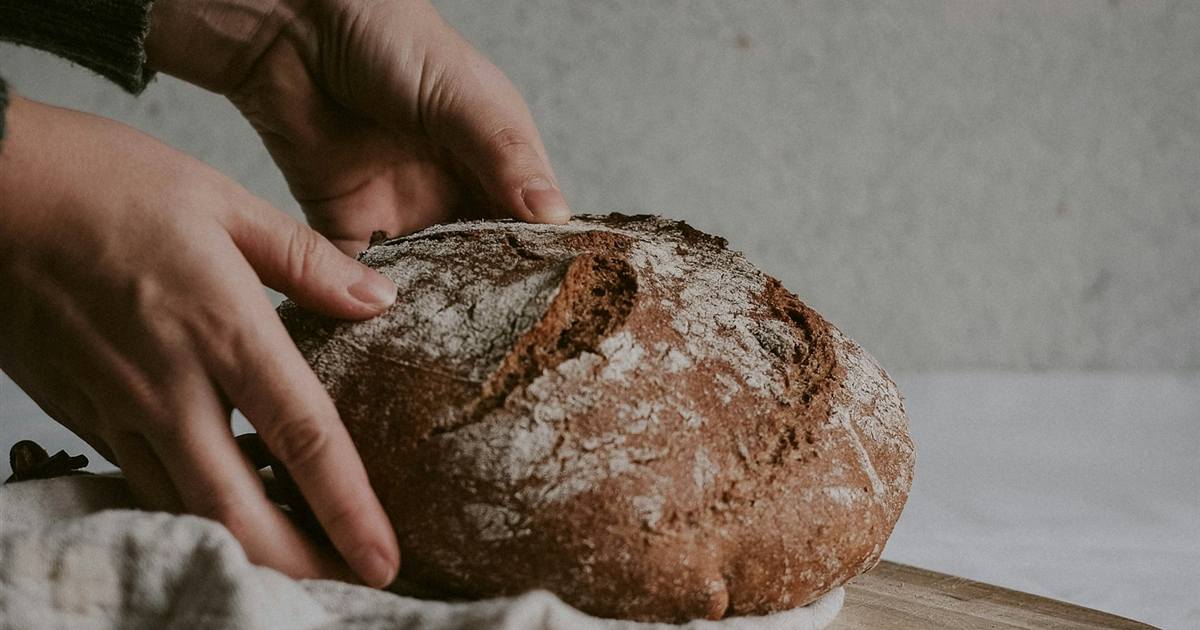
Few questions come up in my office as often as this one: do I need to give up gluten because of Hashimoto's? The honest answer is that it depends on who's asking. For some patients, cutting it out is mandatory treatment; for others, it's a reasonable thing to test; and for many, it's a sacrifice with nothing to show for it. After 25 years of caring for patients with Hashimoto's thyroiditis, I've learned that this distinction matters more than the simple "yes" or "no" you'll find all over the internet. In this article, every claim comes with the scientific reference that supports it — the full list is at the end.
Why this question exists
The link between celiac disease and autoimmune thyroid disease isn't something social media made up: it is well established in the medical literature.
A meta-analysis pooled the available studies and showed that celiac disease is several times more common in people with autoimmune thyroid disease than in the general population (Roy et al., Thyroid, 2016).
And the relationship runs both ways. A Dutch study looked at both groups at once — screening people with Hashimoto's for celiac disease and people with celiac disease for Hashimoto's — and found an association in both directions (Hadithi et al., World Journal of Gastroenterology, 2007). A review that brought this body of evidence together reached the same conclusion: these are two diseases that show up together far more often than chance would explain (Ch'ng et al., Clinical Medicine & Research, 2007).
Having Hashimoto's raises your chances of also having celiac disease. That's a fact. What comes next is where things get more nuanced.
The mechanism: why one would affect the other
The most widely accepted explanation involves a protein called tissue transglutaminase. In celiac disease, the body makes antibodies against it.
What one study showed is that these antibodies don't stay confined to the gut: they also bind to the thyroid follicles and the tissue that supports them, and may contribute to thyroid dysfunction (Naiyer et al., Thyroid, 2008).
In other words, there is a plausible biological pathway — it's not just a statistical coincidence.
If you have celiac disease, there's no debate
For a patient with Hashimoto's who also has confirmed celiac disease, a gluten-free diet is no longer a lifestyle choice — it is medical treatment. And there are two concrete reasons to take it seriously.
The first is length of exposure. A large Italian study showed that the longer a person with celiac disease kept eating gluten before being diagnosed, the higher the prevalence of associated autoimmune diseases (Ventura et al., Gastroenterology, 1999). A late diagnosis comes at a cost.
The second is very practical and almost never mentioned: untreated celiac disease interferes with the absorption of levothyroxine. One study followed patients who needed unexplainably high doses of the hormone, investigated them, and found atypical celiac disease — and once they went on the diet, their dose requirements dropped (Virili et al., Journal of Clinical Endocrinology & Metabolism, 2012).
If you take levothyroxine, do everything right, and your TSH still won't settle, checking for celiac disease is a reasonable step — and one that's often forgotten.
The honest counterpoint: cutting gluten doesn't switch off autoimmunity
Here's the part that rarely shows up in articles promoting a gluten-free diet for everyone.
A prospective, controlled study followed celiac patients through one year of a strictly gluten-free diet to see what would happen to their thyroid. Thyroid autoimmunity did not regress during that period (Metso et al., Scandinavian Journal of Gastroenterology, 2012).
This is important and needs to be said plainly: going gluten-free treats celiac disease, protects the gut, and improves absorption of your medication — but it is not a switch that turns off Hashimoto's once it has set in.
Anyone who promises to reverse thyroiditis simply by cutting out gluten is promising more than the evidence supports.
What about Hashimoto's without celiac disease?
This is the larger group, and it's where the evidence gets thinner.
The study most often cited here followed just over thirty women with Hashimoto's who were not yet on medication. Some followed a gluten-free diet for six months; the others kept eating as usual. The gluten-free group saw a drop in thyroid antibodies (Krysiak et al., Experimental and Clinical Endocrinology & Diabetes, 2019).
It's an interesting finding — and it's only fair to say exactly what it is: a pilot study, with a small number of participants, of short duration, that measured antibodies, not symptoms or thyroid function. Lower antibodies are an encouraging sign, but that's not the same thing as a patient who feels better.
There is also a third possibility, formally recognized in the literature: non-celiac gluten sensitivity, a condition in which a person reacts to gluten without having celiac disease or a wheat allergy (Catassi et al., Nutrients, 2013). It's real, but there's no test that confirms it — the diagnosis is based on how the person responds clinically.
How I handle this in my practice
My position is neither "cut out gluten" nor "don't cut out gluten." It's this:
- Screen people with Hashimoto's for celiac disease, especially when there are digestive symptoms, anemia, iron deficiency with no obvious cause, or ongoing trouble getting TSH under control.
- If celiac disease is confirmed, a gluten-free diet is for life, and that's not up for debate.
- If there's no celiac disease, a well-designed elimination trial is fine for anyone who wants to try it — with a clear beginning, middle, and end.
- Judge the result by how the patient is actually doing, not just by the number on the lab report.
The mistake that ruins the workup
From a practical standpoint, this is the most important point in this article — and the one most often ignored.
Celiac disease tests need to be done BEFORE you take gluten out of your diet.
These tests look for the body's reaction to gluten. If you stopped eating gluten weeks or months ago, that reaction fades and the test can come back negative even if you have the disease. The result is the worst of both worlds: you're left without a diagnosis and, at the same time, without knowing whether you really need the diet.
People who cut out gluten on their own and then seek testing often have to go back to eating gluten for weeks for the test to mean anything — which is unpleasant and entirely avoidable if things are done in the right order.
If you're going to test it, test it properly
An elimination trial that actually tells you something follows a few rules:
- Always screen for celiac disease first.
- Cut gluten out completely and for real, for a set period of two to three months. Going gluten-free "most of the time" doesn't test anything.
- Write down, before and after, what you want to assess: energy, digestion, aches and pains, mental clarity, sleep.
- Have your thyroid rechecked by the same doctor, without changing a bunch of other things at the same time.
- If you noticed no difference at all, going back to eating gluten is a legitimate decision — not a failure.
The bottom line
Gluten isn't the universal villain of Hashimoto's, but it isn't irrelevant either. It's a piece of the puzzle that matters a lot for some people and very little for others.
The right question isn't "Is gluten bad for the thyroid?" It's "Is it bad for mine?" — and that one has an answer, with the right workup.
Dietary restriction has a cost: social, financial, and emotional. It should be justified by a real reason, not adopted out of vague caution. When it's indicated, it's worth every bit of effort. When it isn't, that same effort could go toward something that makes a bigger difference for you.
Scientific references
- Roy A, Laszkowska M, Sundström J, et al. Prevalence of celiac disease in patients with autoimmune thyroid disease: a meta-analysis. Thyroid. 2016;26(7):880-890. PMID: 27256300.
- Hadithi M, de Boer H, Meijer JW, et al. Coeliac disease in Dutch patients with Hashimoto's thyroiditis and vice versa. World Journal of Gastroenterology. 2007;13(11):1715-1722. PMID: 17461476.
- Ch'ng CL, Jones MK, Kingham JG. Celiac disease and autoimmune thyroid disease. Clinical Medicine & Research. 2007;5(3):184-192. PMID: 18056028.
- Naiyer AJ, Shah J, Hernandez L, et al. Tissue transglutaminase antibodies in individuals with celiac disease bind to thyroid follicles and extracellular matrix and may contribute to thyroid dysfunction. Thyroid. 2008;18(11):1171-1178. PMID: 19014325.
- Ventura A, Magazzù G, Greco L. Duration of exposure to gluten and risk for autoimmune disorders in patients with celiac disease. Gastroenterology. 1999;117(2):297-303. PMID: 10419909.
- Virili C, Bassotti G, Santaguida MG, et al. Atypical celiac disease as cause of increased need for thyroxine: a systematic study. Journal of Clinical Endocrinology & Metabolism. 2012;97(3):E419-E422. PMID: 22238404.
- Metso S, Hyytiä-Ilmonen H, Kaukinen K, et al. Gluten-free diet and autoimmune thyroiditis in patients with celiac disease. A prospective controlled study. Scandinavian Journal of Gastroenterology. 2012;47(1):43-48. PMID: 22126672.
- Krysiak R, Szkróbka W, Okopień B. The effect of gluten-free diet on thyroid autoimmunity in drug-naive women with Hashimoto's thyroiditis: a pilot study. Experimental and Clinical Endocrinology & Diabetes. 2019;127(7):417-422. PMID: 30060266.
- Catassi C, Bai JC, Bonaz B, et al. Non-celiac gluten sensitivity: the new frontier of gluten related disorders. Nutrients. 2013;5(10):3839-3853. PMID: 24077239.
📖 Want to go deeper? My book HASHIMOTO'S covers the protocols and foundations of the functional approach to hypothyroidism and Hashimoto's: available on Amazon.
📅 One-on-one appointments, in person in Campinas, São Paulo (Brazil) or by teleconsultation: WhatsApp +55 11 99385-1224
📱 Follow me on Instagram: @drandre.azevedo