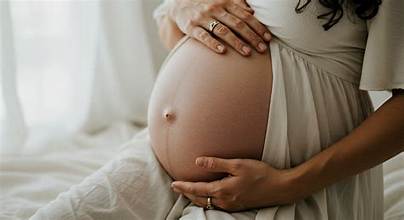
Pregnancy changes the thyroid math in the very first weeks, often before a woman has even had her first prenatal visit. Women who already take levothyroxine usually need more hormone almost immediately — and keeping the same dose from start to finish is one of the most common mistakes I see. This article covers the nine months: what changes, how often to recheck, and also what the science showed when researchers tried treating mild abnormalities. In this article, every claim comes with the scientific reference behind it — the full list is at the end.
Why pregnancy increases the need for thyroid hormone
Three things happen at the same time, and all of them pull in the same direction.
The pregnancy hormone produced by the placenta is similar enough to TSH to stimulate the thyroid directly. At the same time, estrogen increases the protein that carries thyroid hormone in the blood, which ties up part of it and reduces the fraction that is available. And the need for iodine goes up, because now two people depend on that production.
This adaptation has been described in detail in the medical literature for decades (Glinoer, Endocrine Reviews, 1997).
In a woman with a healthy thyroid, the gland handles this on its own. In someone with hypothyroidism, there is no reserve to call on — and that is why the dose needs to change.
The body asks for more hormone. If you can't make it, you need to be given more.
How much and, above all, when
Here is the most practical piece of information in this article.
Researchers followed women with hypothyroidism from the start of pregnancy to measure exactly when their need went up. The answer was striking for how early it came: the increase begins in the very first weeks, often around the fifth week — before most first prenatal visits (Alexander et al., New England Journal of Medicine, 2004).
And it isn't a small adjustment. A large share of the women needed a substantial dose increase over the course of the pregnancy.
This has a direct practical consequence: if you have hypothyroidism and find out you're pregnant, don't wait for your routine appointment. Contact your doctor right away, because the adjustment may be needed even before the first ultrasound.
The most sensitive period is precisely the earliest one, when the baby depends entirely on the mother's hormone.
Why this is taken seriously
Concern about the thyroid in pregnancy is not some recent overreaction. It comes from a classic study that compared the neuropsychological development of children whose mothers had untreated hypothyroidism during pregnancy with that of children whose mothers did not have the condition, and found poorer performance in the first group (Haddow et al., New England Journal of Medicine, 1999).
That study changed medical practice, and it is the reason TSH is now routinely tested in so many pregnant women.
True hypothyroidism in pregnancy must be treated. That is not up for debate anywhere.
Keep that sentence in mind, because the next section can be misread without it.
The honest counterpoint: what happened when treating mild cases was put to the test
Here is the part that almost never reaches patients — and it is one of the best-studied topics in this entire series.
After the 1999 study, the natural conclusion seemed obvious: if a lack of hormone causes harm, then screening every pregnant woman and treating any abnormality should be protective. That hypothesis was tested — three times, in large trials published in the most rigorous medical journal in the world. And none of the three found the expected benefit.
The first screened pregnant women and treated those with abnormal results, then measured the children's cognitive function. There was no difference (Lazarus et al., New England Journal of Medicine, 2012).
The second specifically treated subclinical hypothyroidism and hypothyroxinemia in pregnancy, following the children up to age five. It also found no difference (Casey et al., New England Journal of Medicine, 2017).
The third tested giving levothyroxine to women with positive anti-TPO antibodies and normal thyroid function who were trying to conceive after pregnancy losses. It did not increase the live birth rate (Dhillon-Smith et al., New England Journal of Medicine, 2019).
That last one deserves a note, because it contradicts an earlier, much smaller study that had suggested a benefit in this same situation (Negro et al., Journal of Clinical Endocrinology & Metabolism, 2006). When a promising small study is followed by a large, well-conducted trial that doesn't confirm the finding, honest medicine goes with the second.
What this means — and what it doesn't
It does not mean stopping levothyroxine during pregnancy. If you have hypothyroidism and are pregnant, continue your treatment and make sure your dose gets adjusted. That is the recommendation, and it has not changed.
It does mean that a mildly abnormal test result doesn't always call for medication, and that the decision in each case is a clinical one — not automatic. International guidelines reflect exactly this nuance, handling different situations in different ways (Alexander et al., Thyroid, 2017; Negro and Stagnaro-Green, BMJ, 2014).
Treating overt hypothyroidism protects. Treating every slightly abnormal number did not show the benefit people expected.
Monitoring in practice
What usually works well, and is worth discussing at your prenatal visits:
- When you find out you're pregnant, let whoever manages your thyroid know right away — don't wait for your scheduled appointment.
- Repeat the test at short intervals early on, when changes happen fastest, and space them out as things stabilize.
- Know that the lab target during pregnancy is not the same as outside of pregnancy, and it varies by trimester.
- Keep levothyroxine spaced apart from ferrous sulfate and calcium, which happen to be the most commonly used prenatal supplements — this practical detail trips up a lot of pregnant women.
- Agree on a plan for after delivery, because the dose usually needs to go back to its previous level.
That last point is the most often forgotten of all: the higher pregnancy dose, kept up after delivery, means too much hormone. There is also an article on this blog about postpartum thyroiditis that complements this one.
The practical mistake that ruins everything
If you take away just one thing from this article, let it be this:
Don't go through your entire pregnancy on the dose that worked before you got pregnant.
It is the most common mistake and the easiest to avoid. The dose that kept your TSH well controlled before pregnancy is probably not enough from the first weeks on — and no one notices that without repeating the test.
The reverse is also true: don't increase it on your own, because too much hormone has consequences too. The adjustment is made based on lab tests, not guesswork.
The bottom line
Pregnancy raises the need for thyroid hormone early, sometimes before the first prenatal visit. Women who already have hypothyroidism need closer monitoring during this period, and treatment protects.
At the same time, it's worth knowing that the large trials did not confirm a benefit from treating every mild abnormality — and that is a good reason to talk through your specific case rather than accepting or refusing treatment based on a general rule.
If you have hypothyroidism and are pregnant or planning to become pregnant, the most important phone call is the one that lets your doctor know early. Everything else gets adjusted with lab tests.
Scientific references
- Glinoer D. The regulation of thyroid function in pregnancy: pathways of endocrine adaptation from physiology to pathology. Endocrine Reviews. 1997;18(3):404-433. PMID: 9183570.
- Haddow JE, Palomaki GE, Allan WC, et al. Maternal thyroid deficiency during pregnancy and subsequent neuropsychological development of the child. New England Journal of Medicine. 1999;341(8):549-555. PMID: 10451459.
- Alexander EK, Marqusee E, Lawrence J, Jarolim P, Fischer GA, Larsen PR. Timing and magnitude of increases in levothyroxine requirements during pregnancy in women with hypothyroidism. New England Journal of Medicine. 2004;351(3):241-249. PMID: 15254282.
- Alexander EK, Pearce EN, Brent GA, et al. 2017 guidelines of the American Thyroid Association for the diagnosis and management of thyroid disease during pregnancy and the postpartum. Thyroid. 2017;27(3):315-389. PMID: 28056690.
- Negro R, Stagnaro-Green A. Diagnosis and management of subclinical hypothyroidism in pregnancy. BMJ. 2014;349:g4929. PMID: 25288580.
- Negro R, Formoso G, Mangieri T, Pezzarossa A, Dazzi D, Hassan H. Levothyroxine treatment in euthyroid pregnant women with autoimmune thyroid disease: effects on obstetrical complications. Journal of Clinical Endocrinology & Metabolism. 2006;91(7):2587-2591. PMID: 16621910.
- Lazarus JH, Bestwick JP, Channon S, et al. Antenatal thyroid screening and childhood cognitive function. New England Journal of Medicine. 2012;366(6):493-501. PMID: 22316443.
- Casey BM, Thom EA, Peaceman AM, et al. Treatment of subclinical hypothyroidism or hypothyroxinemia in pregnancy. New England Journal of Medicine. 2017;376(9):815-825. PMID: 28249134.
- Dhillon-Smith RK, Middleton LJ, Sunner KK, et al. Levothyroxine in women with thyroid peroxidase antibodies before conception. New England Journal of Medicine. 2019;380(14):1316-1325. PMID: 30907987.
📖 Want to go deeper? My book HASHIMOTO'S covers the protocols and foundations of the functional approach to hypothyroidism and Hashimoto's: available on Amazon.
📅 Personalized consultation (in person in Campinas, São Paulo, Brazil, or via teleconsultation): WhatsApp +55 11 99385-1224
📱 Follow on Instagram: @drandre.azevedo